
Care Guides · Reptiles
African Fat-Tailed Gecko Care Guide: The Underrated Cousin of the Leopard Gecko
Fat-tailed geckos are calmer, more secretive, and need higher humidity than leopard geckos. Here's everything you need to keep one thriving.
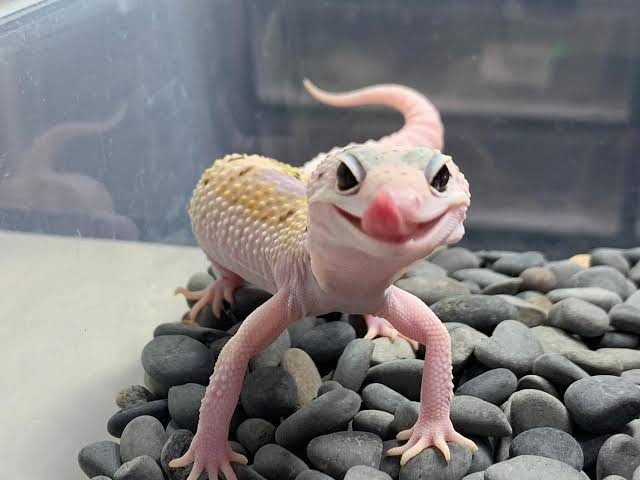
Photo: African fat-tailed gecko, Tails & Scales
If you've kept a leopard gecko and want something similar but with a different character, the African fat-tailed gecko (Hemitheconyx caudicinctus) is worth serious consideration. They're often overlooked in favour of their more famous cousin, but AFTs have a devoted following among experienced keepers — and for good reason.
They're calmer, more secretive, and in many ways more interesting to observe than leopard geckos. They're also slightly more demanding, particularly around humidity. Get that right and you'll have one of the most rewarding geckos in the hobby.
Meet the African Fat-Tailed Gecko
Native to West Africa — from Senegal through to Cameroon — fat-tailed geckos inhabit dry savannah and scrubland, sheltering in burrows and under rocks during the heat of the day. Despite the "dry" habitat description, their microhabitat is often more humid than you'd expect: burrows and rock crevices retain moisture, and the animals experience higher humidity at ground level than the ambient air suggests.
This is the key difference from leopard geckos: AFTs need higher humidity, particularly for shedding. Get this wrong and you'll have chronic retained shed problems.
Like leopard geckos, AFTs are ground-dwelling, crepuscular insectivores with movable eyelids and no adhesive toe pads. They're stockier than leopard geckos, with a broader head and — as the name suggests — a notably fat, carrot-shaped tail used for fat storage.
Enclosure
A single adult fat-tailed gecko needs a minimum 60×45×30cm enclosure. A 90×45×30cm is better and gives more room for a proper thermal gradient and multiple hides.
Front-opening glass terrariums are ideal. AFTs are more secretive than leopard geckos and will spend most of their time in hides — a front-opening enclosure lets you observe them without the stress of overhead access.
Temperature and Heating
The thermal gradient requirements are similar to leopard geckos:
- Warm side (basking spot): 30–32°C
- Cool side: 22–24°C
- Night-time minimum: 20°C
Use an under-tank heater or deep heat projector connected to a thermostat. Never use a heat source without a thermostat. Verify temperatures with a digital thermometer and probe — not a stick-on dial.
A ceramic heat emitter on a thermostat is useful for maintaining ambient temperatures in cooler rooms without adding light.
Humidity: The Critical Difference
This is where AFT care diverges significantly from leopard gecko care. Fat-tailed geckos need:
- Ambient humidity: 40–60%
- Humid hide: 70–80%
A humid hide is not optional — it's essential. Without it, fat-tailed geckos shed poorly, retain skin on their toes and around their eyes, and develop chronic stress.
Setting up a humid hide:
- Use a hide with a small entrance hole to retain moisture
- Fill with damp sphagnum moss or coco fibre
- Check moisture levels every 2–3 days and re-dampen as needed
- Place on the warm side of the enclosure
If your ambient humidity is consistently below 40%, consider a small reptile fogger on a timer, or lightly mist one side of the enclosure in the evening.
Substrate
A bioactive substrate is the best option for fat-tailed geckos — it naturally maintains humidity, supports burrowing behaviour, and looks excellent.
Bioactive mix: 60% organic topsoil, 30% play sand, 10% organic matter (leaf litter, coco fibre). Add a cleanup crew of tropical isopods and springtails. Depth of at least 8–10cm to allow burrowing.
Simpler alternatives:
- Coco fibre — retains humidity well, easy to maintain
- Topsoil — cheap, effective, natural
Avoid calcium sand and loose fine sand — impaction risk, especially in juveniles.
Hides
Provide at least three hides:
- Warm hide — on the warm side
- Cool hide — on the cool side
- Humid hide — on the warm side, filled with damp sphagnum moss
AFTs are more secretive than leopard geckos and will use their hides more frequently. Don't be alarmed if you rarely see your gecko — this is normal behaviour, not a sign of illness.
Hides should be snug. A hide that's too large provides no security.
Feeding
Fat-tailed geckos are insectivores with the same dietary requirements as leopard geckos.
Staple feeders:
- Dubia roaches — the best option
- Crickets — good nutrition, widely available
- Black soldier fly larvae — excellent calcium source
Feeding frequency:
- Juveniles: daily
- Sub-adults: every other day
- Adults: every 2–3 days
Insect size: no wider than the space between the gecko's eyes.
Supplementation:
- Calcium without D3: every feeding
- Calcium with D3: every 2–3 feedings (if no UVB)
- Multivitamin: once weekly
Gut-load your feeders for 24–48 hours before offering them. A well-fed feeder insect is significantly more nutritious than an unfed one.
Handling
Fat-tailed geckos are generally calmer and more docile than leopard geckos, but they're also more secretive and take longer to settle into a new home. Give a new AFT at least 3–4 weeks before handling.
When you do start handling, keep sessions short (5–10 minutes) and build up gradually. Support the gecko's full body. Like leopard geckos, AFTs can drop their tails — the tail will regrow but the process is stressful.
AFTs tend to be less active during handling than leopard geckos — they'll often sit calmly in your hand rather than constantly moving. This makes them excellent for keepers who want a more relaxed handling experience.
Shedding
Fat-tailed geckos shed every 4–6 weeks (juveniles) or 6–8 weeks (adults). A healthy shed should come off in one complete piece.
The most common shedding problem in AFTs is retained shed on the toes and around the eyes — almost always caused by insufficient humidity. A well-maintained humid hide prevents this.
If you notice retained shed, soak the affected area in lukewarm water for 10–15 minutes and gently remove the skin with a damp cotton bud. Never pull forcefully, especially around the eyes.
Health
The health concerns for fat-tailed geckos are similar to leopard geckos:
Retained shed (dysecdysis): the most common issue in AFTs. Caused by low humidity. Preventable with a proper humid hide.
Metabolic bone disease (MBD): caused by calcium/D3 deficiency. Preventable with correct supplementation.
Respiratory infections: caused by temperatures that are too cold or too damp. Signs include wheezing and open-mouth breathing. Requires veterinary treatment.
Parasites: internal parasites are common in wild-caught animals. Always source captive-bred geckos from reputable breeders.
Find a reptile-experienced vet before you need one.
AFT vs Leopard Gecko: Which Is Right for You?
| Fat-Tailed Gecko | Leopard Gecko | |
|---|---|---|
| Temperament | Calmer, more secretive | More active, curious |
| Humidity needs | Higher (40–60%) | Lower (30–40%) |
| Handling | Very docile | Generally docile |
| Activity | More nocturnal | Crepuscular |
| Availability | Less common | Widely available |
| Morphs | Fewer options | Huge variety |
If you want a calm, handleable gecko that's slightly more of a challenge than a leopard gecko, the fat-tailed gecko is an excellent choice. They're not as widely available in South Africa as leopard geckos, but we source them regularly — come in and ask.
More guides
Keep reading.
Leopard Gecko Care Guide: Everything a New Owner Needs to Know
Leopard geckos are one of the best reptiles for beginners. Here's how to set up their enclosure, feed them correctly, and keep them healthy long-term.
Elle Jordaan · 10 min read
Crested Gecko Care Guide: The Complete Guide to Keeping Correlophus ciliatus
Crested geckos are arboreal, room-temperature friendly, and can thrive on a prepared diet. Here's how to keep one properly — from enclosure to feeding to handling.
Elle Jordaan · 9 min read
Your First Planted Tank: A Beginner's Complete Setup Guide
Everything you need to know to set up a thriving planted aquarium from scratch — substrate, lighting, plants, and cycling explained simply.
Elle Jordaan · 8 min read