
Care Guides · Aquascaping
Aquascaping Basics: Hardscape, Layout, and the Art of Negative Space
Great aquascapes are built before a single plant goes in. Learn how to plan your hardscape, choose the right stones and wood, and use negative space effectively.

Photo: A planted aquascape by Dileepkumardr, CC0, via Wikimedia Commons

Most people think aquascaping is about plants. It isn't — or at least, it doesn't start there. The best aquascapes are designed before a single stem goes into the substrate. The plants fill in the structure; the hardscape is the structure.
This guide covers the fundamentals of aquascape design: how to choose and arrange hardscape materials, how to apply basic compositional principles, and why the empty spaces in your tank matter as much as the filled ones.
What Is Hardscape?
Hardscape refers to the non-living structural elements of an aquascape: rocks, stones, driftwood, and roots. These materials form the skeleton of your design. They create height, depth, focal points, and visual flow — and they do it permanently, without growing, dying, or needing fertiliser.
Getting your hardscape right is the single most impactful thing you can do for the long-term appearance of your tank. A well-placed stone arrangement will look good even before the plants fill in. A poorly placed one will never look right, no matter how well the plants grow.
Choosing Your Materials
Stones
Seiryu stone is the classic aquascaping rock — angular, blue-grey, with dramatic white veining. It's striking but raises pH and hardness, which limits the fish and plants you can keep with it.
Dragon stone (Ohko stone) is lighter, more porous, and pH-neutral. Its irregular, cave-like texture creates interesting negative space and is excellent for moss attachment.
Lava rock is affordable, pH-neutral, and highly porous — great for beneficial bacteria colonisation and moss growth. Less dramatic than Seiryu but very versatile.
Ryuoh stone sits between Seiryu and Dragon stone in character — angular with a rougher texture. pH-neutral and increasingly popular.
Key rule: Use only one type of stone per aquascape. Mixing stone types almost always looks chaotic. The same applies to wood — pick one species and stick with it.
Driftwood and Roots
Spider wood (Azalea root) has fine, branching structure that mimics tree roots or fallen branches. Excellent for creating a sense of scale and depth.
Manzanita is similar to spider wood but denser, with smoother branches. Very natural-looking.
Cholla wood is hollow and cylindrical — more useful as a functional element (shrimp love it) than a primary design feature.
Malaysian driftwood is dense, dark, and slow to waterlog. Its irregular, gnarled shape suits jungle-style layouts.
Always boil or soak new wood before adding it to your tank to remove tannins and reduce the risk of introducing pathogens.
Compositional Principles
The Rule of Thirds
Divide your tank into a 3×3 grid (like a tic-tac-toe board). Place your primary focal point — your tallest stone, your most dramatic piece of wood — at one of the four intersections, not in the centre. This creates visual tension and makes the composition feel dynamic rather than static.
The Golden Ratio
More sophisticated than the rule of thirds, the golden ratio (approximately 1:1.618) describes a natural proportion found throughout nature. In aquascaping, it's often applied as a 60/40 split: the main hardscape occupies roughly 60% of the tank width, with open substrate on the other 40%.
Odd Numbers
Use odd numbers of stones (3, 5, 7) rather than even numbers. Even groupings feel symmetrical and artificial; odd groupings feel natural. This is one of the most reliable rules in aquascaping and applies to both stones and wood pieces.
Scale and Perspective
To create the illusion of depth, place larger stones and wood at the front of the tank and smaller pieces toward the back. Use fine-leaved plants at the back and larger-leaved plants at the front. This reversal of natural perspective tricks the eye into perceiving greater depth than actually exists.
The Art of Negative Space
Negative space — the empty areas of your aquascape — is not wasted space. It's active design.
In the Iwagumi style (the minimalist stone-only style pioneered by Takashi Amano), negative space is as carefully considered as the stones themselves. A single open expanse of white sand in front of a stone grouping creates a sense of calm, scale, and natural landscape that a densely planted foreground never could.
How to use negative space effectively:
- Leave the foreground open on the side opposite your main focal point. This creates visual breathing room and draws the eye across the tank.
- Don't fill every gap between stones with plants. Let the hardscape breathe.
- Use a light-coloured substrate (white sand, light gravel) in open areas to maximise contrast and the sense of space.
The most common beginner mistake in aquascaping is over-planting. Resist the urge to fill every square centimetre. The empty spaces are part of the design.
Planning Before You Plant
Before you add any substrate or water, dry-scape your tank. Arrange your hardscape on a flat surface first, then transfer it to the empty tank. Take photos from the front at eye level — this is the viewing angle that matters.
Ask yourself:
- Is there a clear focal point?
- Does the eye move naturally through the composition?
- Are there interesting shadows and depth?
- Does the arrangement feel balanced without being symmetrical?
Adjust until you're happy. Once the substrate goes in and the tank fills with water, major changes become much harder.
Styles to Know
Iwagumi: Minimalist stone-only layouts. Open substrate, carpeting plants, schooling fish. Demanding to maintain but visually stunning.
Nature Aquarium: Amano's broader style — naturalistic, asymmetric, diverse plant palette. More forgiving than Iwagumi.
Dutch Style: Dense, structured planting with defined colour and texture contrasts. Less hardscape, more plant architecture. Very different aesthetic to the Japanese styles.
Jungle Style: Dense, overgrown, naturalistic. Tolerates imperfection. Good for beginners who want a lush look without strict compositional rules.
Come See It in Person
We regularly set up display tanks in-store and are happy to walk you through hardscape selection and layout before you commit to a design. Bring your tank dimensions and we'll help you find the right stones and wood for your vision.
Aquascaping is a practice, not a formula. The more tanks you design, the better your eye becomes — but the fundamentals above will serve you well from the very first layout.
More guides
Keep reading.

Your First Planted Tank: A Beginner's Complete Setup Guide
Everything you need to know to set up a thriving planted aquarium from scratch — substrate, lighting, plants, and cycling explained simply.
Elle Jordaan · 8 min read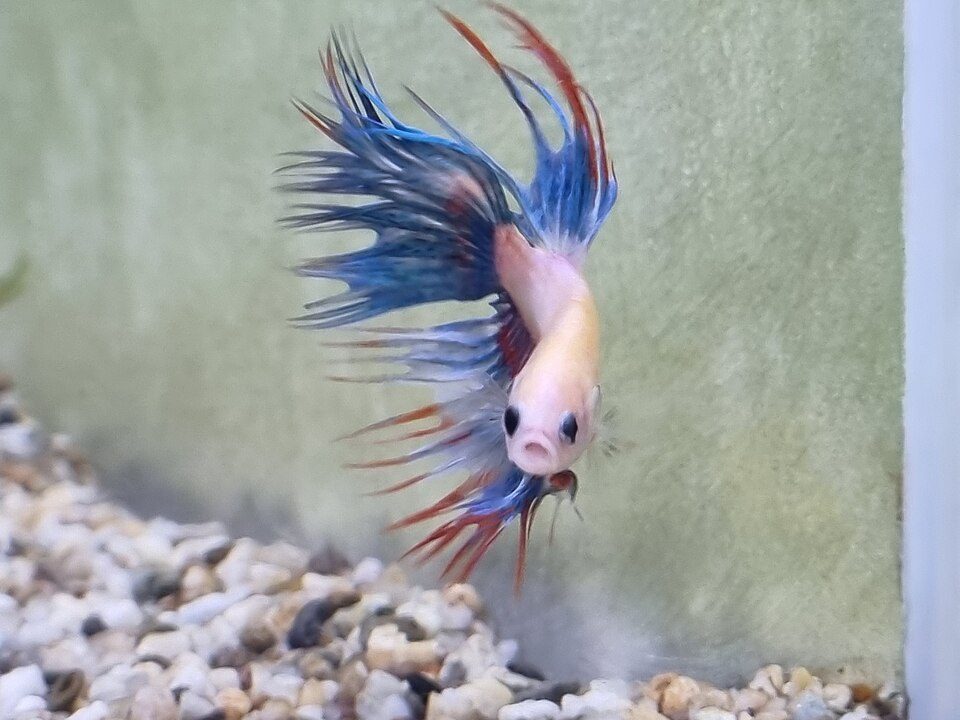
Betta Fish Care Guide: How to Keep a Siamese Fighting Fish Properly
Bettas are beautiful, intelligent, and deeply misunderstood. They don't belong in bowls or vases. Here's how to keep one the right way — and why it matters.
Elle Jordaan · 9 min read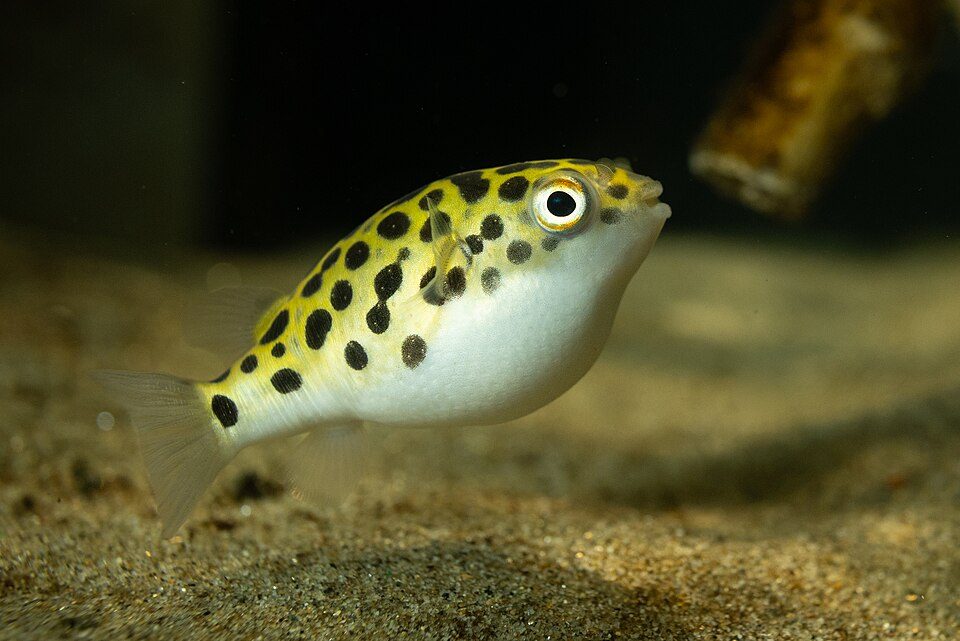
Puffer Fish Care Guide: Figure 8, Pea Puffers, and Green Spotted Puffers
Puffers are intelligent, personable, and endlessly entertaining — but they're not community fish. Everything you need to know about the three most popular puffer species.
Louis Jordaan · 12 min read