
Care Guides · Reptiles
Crested Gecko Care Guide: The Complete Guide to Keeping Correlophus ciliatus
Crested geckos are arboreal, room-temperature friendly, and can thrive on a prepared diet. Here's how to keep one properly — from enclosure to feeding to handling.
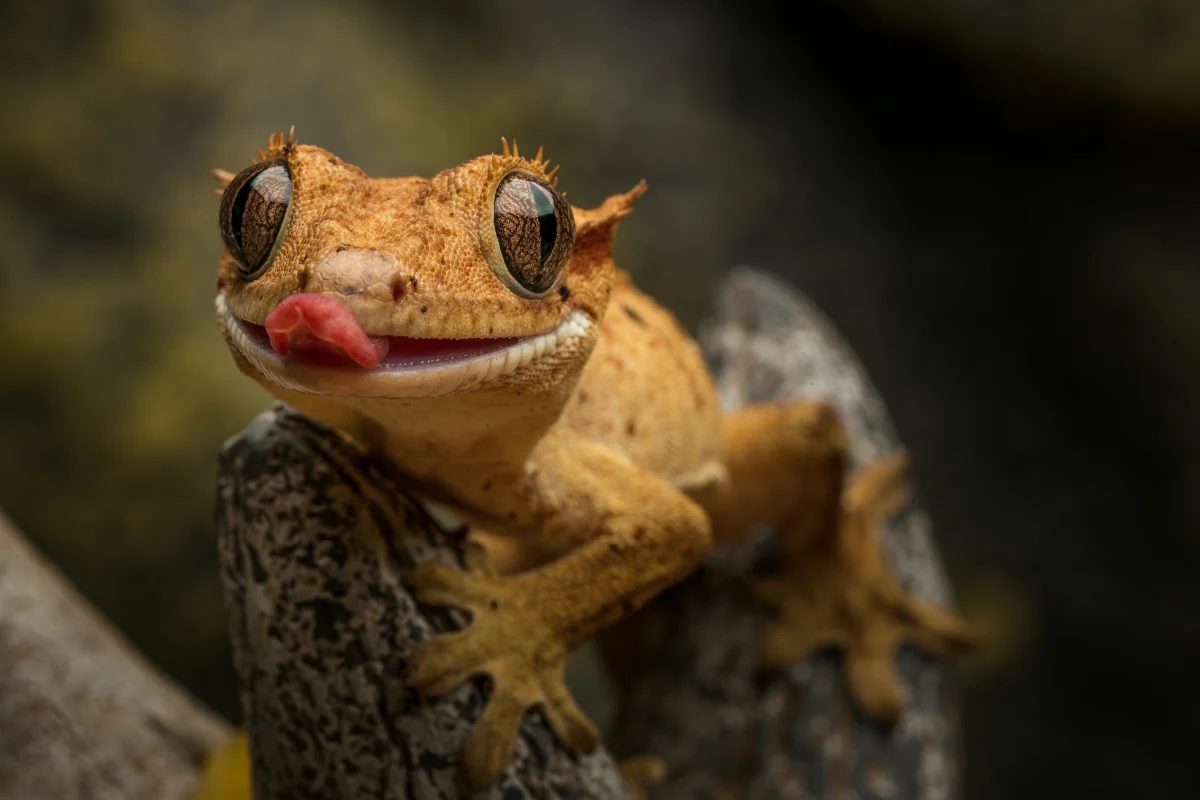
Photo: Crested gecko, Tails & Scales
Crested geckos were thought to be extinct until their rediscovery in New Caledonia in 1994. Within a decade they'd become one of the most popular reptiles in the hobby. Today they're one of the most widely kept geckos in the world — and one of the most beginner-friendly.
What makes them special? They don't need supplemental heating in most South African homes, they can thrive on a commercially prepared diet, they're arboreal and visually striking, and they're generally calm and handleable. They're also fragile in specific ways that new keepers often underestimate — particularly around temperature.
This guide covers everything you need to keep a crested gecko properly.
Understanding Crested Geckos
Crested geckos (Correlophus ciliatus, formerly Rhacodactylus ciliatus) are arboreal lizards from the rainforests of New Caledonia, a French territory in the South Pacific. They live in the forest canopy, hunting insects and feeding on fruit at night.
They're named for the crest of soft spines running from above each eye down the back. They have adhesive toe pads that allow them to climb smooth surfaces, including glass. Unlike leopard and fat-tailed geckos, they cannot regenerate their tails — a dropped tail is gone permanently.
Enclosure
Crested geckos are arboreal — they need height, not floor space. A vertical enclosure is essential.
Minimum size for one adult: 45×45×60cm (height is the critical dimension) Recommended: 45×45×90cm or larger
Mesh-sided terrariums (like the Exo Terra or ReptiBreeze) are ideal — they provide excellent ventilation, which is important for preventing respiratory issues in a humid environment. Glass terrariums with mesh tops also work but require more attention to airflow.
Furnish the enclosure with:
- Plenty of climbing branches, cork bark tubes, and bamboo
- Live or artificial plants for cover and humidity
- A water dish (crested geckos also drink water droplets from leaves — mist the enclosure nightly)
- A food ledge or magnetic feeding cup for CGD
Temperature: The Most Critical Factor
This is where crested gecko care differs most significantly from other geckos. Crested geckos are cool-temperature animals. They come from a temperate rainforest environment and do not tolerate heat.
Ideal temperature range: 22–26°C Maximum: 28°C — above this, crested geckos experience heat stress Lethal temperature: sustained temperatures above 30°C will kill a crested gecko
In most South African homes, no supplemental heating is needed for most of the year. Cape Town's climate is actually close to ideal. In summer, the concern is keeping them cool, not warm.
If temperatures exceed 28°C:
- Move the enclosure to the coolest room in the house
- Use a fan to circulate air (not directed at the enclosure)
- Place frozen water bottles near (not in) the enclosure
- Consider a small air conditioner for the room in extreme heat
In winter: if your home drops below 18°C at night, a low-wattage ceramic heat emitter on a thermostat can maintain minimum temperatures. Most Cape Town homes don't need this.
Never use a heat mat under a crested gecko enclosure — they're arboreal and don't benefit from belly heat.
Humidity
Crested geckos need moderate to high humidity:
- Ambient: 50–70%
- After misting: up to 80–90%, then allowed to drop back down
The key is a wet/dry cycle — mist the enclosure heavily in the evening, allow it to partially dry out during the day. Stagnant high humidity without airflow causes respiratory infections.
Mist the enclosure once or twice daily with dechlorinated water. A pressure sprayer makes this easier. Live plants help maintain humidity naturally.
Lighting and UVB
Crested geckos are nocturnal and were traditionally kept without UVB. As with fat-tailed geckos, recent research suggests low-level UVB (a 5.0 or 6% T5 HO tube) improves calcium metabolism and overall health.
A 12-hour light/dark cycle is appropriate. The light cycle also helps regulate the gecko's circadian rhythm. Avoid bright, direct light — crested geckos are sensitive to intense lighting.
Feeding: The CGD Advantage
One of the most convenient aspects of crested gecko keeping is that they can thrive on a commercially prepared diet — Crested Gecko Diet (CGD). This is a powder mixed with water to a smooth paste consistency.
Recommended CGD brands:
- Repashy Crested Gecko Diet — the original, still excellent
- Pangea Fruit Mix — highly palatable, good nutritional profile
- Arcadia EarthPro Crested Gecko — newer option, excellent ingredients
CGD should make up the majority of the diet. Offer it every 2–3 days in a small dish or magnetic feeding cup. Remove uneaten CGD after 24–48 hours to prevent mould.
Live insects: supplement with live insects 1–2 times per week. Dubia roaches, crickets, and black soldier fly larvae are all good options. Insects add enrichment and ensure the gecko gets animal protein. Dust with calcium before offering.
Fruit: small amounts of soft fruit (mango, papaya, banana) can be offered occasionally as enrichment. Not necessary if feeding a quality CGD.
Water: always available in a shallow dish. Also mist the enclosure so the gecko can drink droplets from leaves and glass.
Supplementation
If feeding a quality CGD as the primary diet, additional supplementation is minimal:
- Calcium without D3: dust live insects at every feeding
- Multivitamin: once weekly on live insects (not needed if CGD is the primary diet)
CGD already contains calcium and vitamins — don't over-supplement, as this can cause issues.
Handling
Crested geckos are generally calm and handleable, but they're also fast and jumpy — especially juveniles. They're not as predictably docile as leopard or fat-tailed geckos.
Give a new gecko 2–3 weeks to settle before handling. Start with short sessions near the ground (in case of drops). Crested geckos often "walk" from hand to hand — let them move at their own pace rather than restraining them.
The tail: crested geckos can drop their tails as a defence mechanism, but unlike leopard geckos, the tail does not regenerate. A tailless crested gecko (called a "frogbutt" in the hobby) is perfectly healthy, but the tail is gone permanently. Handle gently and avoid situations that might cause stress-induced tail drop.
Shedding
Crested geckos shed every 4–6 weeks. They typically eat their shed skin immediately — this is normal behaviour. You may never see a shed skin.
Retained shed is less common in crested geckos than in leopard geckos, but can occur if humidity is too low. Ensure the enclosure is misted regularly.
Morphs
Crested geckos come in a wide range of colour morphs and pattern types. Some of the most common:
- Flame: dark base with a lighter dorsal stripe
- Harlequin: high-contrast pattern with cream or yellow markings
- Pinstripe: cream or yellow lines running along the crests
- Dalmatian: spots on a lighter base
- Lily white: a co-dominant morph producing animals with extensive white patterning
- Axanthic: reduced yellow pigmentation, producing grey/black/white animals
Morph pricing varies significantly. A standard flame or harlequin is affordable; high-expression lily whites and axanthics command premium prices.
Health
Floppy tail syndrome: caused by sleeping head-down on vertical surfaces for extended periods, which puts pressure on the tail base and can eventually cause the tail to flop to one side. Provide plenty of horizontal perches so the gecko can sleep horizontally.
Metabolic bone disease (MBD): caused by calcium/D3 deficiency. Preventable with proper supplementation and UVB.
Respiratory infections: caused by stagnant high humidity without adequate ventilation. Ensure good airflow in the enclosure.
Cryptosporidiosis: as with other geckos, crypto is a serious concern. Source captive-bred animals from reputable breeders.
Come and See Us
We stock captive-bred crested geckos in a range of morphs, along with CGD, live feeders, and all the enclosure equipment you need. If you're setting up for the first time, come in — we'll help you choose the right enclosure and get everything set up correctly from the start.
Crested geckos are one of the most rewarding reptiles you can keep. Get the temperature right, keep the humidity consistent, and feed a quality CGD, and you'll have a healthy, handleable gecko for 15–20 years.
More guides
Keep reading.
Leopard Gecko Care Guide: Everything a New Owner Needs to Know
Leopard geckos are one of the best reptiles for beginners. Here's how to set up their enclosure, feed them correctly, and keep them healthy long-term.
Elle Jordaan · 10 min read
African Fat-Tailed Gecko Care Guide: The Underrated Cousin of the Leopard Gecko
Fat-tailed geckos are calmer, more secretive, and need higher humidity than leopard geckos. Here's everything you need to keep one thriving.
Elle Jordaan · 8 min read
Your First Planted Tank: A Beginner's Complete Setup Guide
Everything you need to know to set up a thriving planted aquarium from scratch — substrate, lighting, plants, and cycling explained simply.
Elle Jordaan · 8 min read