
Care Guides · Aquatics
Goldfish Care Guide: How to Keep Goldfish and Orandas Properly
Goldfish are not beginner fish — they're long-lived, heavy-feeding, and need far more space than most people realise. Here's how to keep common goldfish and fancy varieties like Orandas the right way.
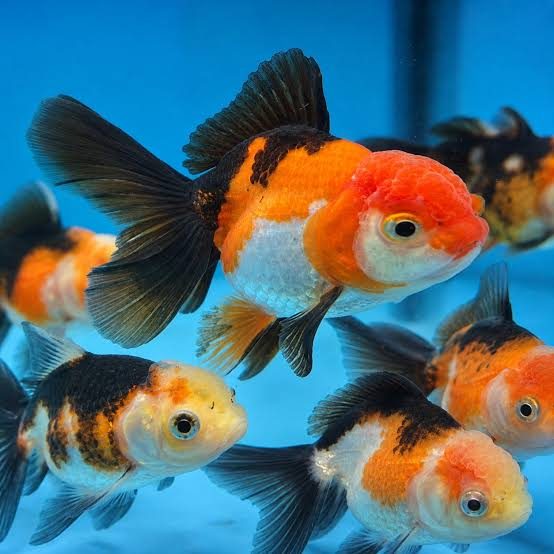
Photo: Goldfish, Tails & Scales
The Most Misunderstood Fish in the Hobby
Goldfish have a reputation problem. They're sold in tiny bags at fairs, kept in bowls on windowsills, and treated as disposable pets that are expected to live a few months at most. The reality is very different: a well-kept goldfish can live 15–20 years, grow to 30cm or more, and become genuinely interactive and recognisable as individuals.
The gap between how goldfish are typically kept and how they should be kept is enormous. This guide is about closing that gap — whether you're keeping common goldfish, the elegant Oranda, or any of the other fancy varieties.
Common Goldfish vs. Fancy Goldfish
Before anything else, it helps to understand the two broad categories of goldfish, because their care requirements differ significantly.
Common Goldfish (Single-tailed)
This group includes the classic common goldfish, comets, and shubunkins. They have a streamlined, single-tailed body shape, are fast swimmers, and are extremely hardy. They're best suited to ponds or very large tanks. In a pond, a common goldfish can reach 30–45cm and live for decades.
Common goldfish are not ideal for indoor aquariums long-term — they grow too large and produce too much waste for most home setups. If you want goldfish indoors, fancy varieties are a better fit.
Fancy Goldfish (Double-tailed)
Fancy goldfish have been selectively bred for centuries for ornamental traits: double tails, rounded bodies, elaborate finnage, and in the case of the Oranda, a distinctive fleshy growth on the head called a wen. This group includes Orandas, Ryukins, Black Moors, Ranchus, Lionheads, Telescopes, and Bubble Eyes.
Fancy goldfish are slower swimmers, more delicate, and more susceptible to health issues than their single-tailed cousins — but they're also more visually spectacular and better suited to aquarium life. The Oranda is one of the most popular and widely kept fancy varieties.
The Oranda
The Oranda is arguably the most recognisable fancy goldfish. Its defining feature is the wen — a raspberry-like fleshy growth that covers the top of the head and, in mature fish, can extend over the cheeks and gill covers. The wen develops gradually as the fish matures, typically becoming prominent by 1–2 years of age.
Orandas come in a wide range of colours: red, orange, calico, black, blue, chocolate, and the striking Red Cap Oranda — a white fish with a vivid red wen. They have a rounded, egg-shaped body and a flowing double tail that fans out beautifully when the fish is at rest.
What to look for when buying an Oranda:
- Active, alert behaviour — a healthy Oranda is curious and responsive
- Clear eyes (Telescope and Black Moor varieties aside)
- No clamped fins, white spots, or visible wounds
- A wen that is clean and free of red streaks or ulcers
- Upright swimming posture — a fish that tilts or floats at the surface may have swim bladder issues
Tank Size
This is where most goldfish setups go wrong. The old "one inch of fish per gallon" rule is completely inadequate for goldfish, which are large, fast-growing, and produce extraordinary amounts of waste.
Minimum tank sizes:
- Single fancy goldfish: 120 litres (30 gallons)
- Each additional fancy goldfish: add 40 litres (10 gallons)
- Common/comet goldfish: 200+ litres per fish, or a pond
A pair of Orandas needs at least 160 litres to thrive long-term. This is not a suggestion — it's the minimum for stable water quality and healthy growth. Goldfish kept in undersized tanks grow slowly, develop health problems, and live shortened lives.
Tank shape matters too. Goldfish need horizontal swimming space more than height. A long, wide tank is better than a tall, narrow one. Avoid bowls entirely — they have inadequate surface area for gas exchange and no room for filtration.
Filtration
Goldfish are messy. They eat constantly, produce large amounts of ammonia, and stir up substrate as they forage. Filtration is not optional — it's the single most important piece of equipment in a goldfish tank.
Filter sizing: For goldfish, you need a filter rated for at least 8–10 times the tank volume per hour. For a 160-litre tank, that means a filter with a flow rate of at least 1,280–1,600 litres per hour. This sounds like a lot, but goldfish produce waste at a rate that overwhelms undersized filters quickly.
Filter types:
- Canister filters are ideal — high capacity, easy to maintain, and can be positioned to create good flow without excessive surface turbulence
- Hang-on-back (HOB) filters work well for smaller setups
- Sponge filters can supplement but are rarely sufficient as the sole filter for goldfish
Cycling: Never add goldfish to an uncycled tank. The nitrogen cycle must be fully established before any fish go in. Goldfish produce so much ammonia that an uncycled tank can become toxic within hours.
Water Parameters
Goldfish are coldwater fish. This is one of the most important things to understand about their care — they do not belong in tropical tanks with heaters set to 26°C.
| Parameter | Ideal Range |
|---|---|
| Temperature | 18–22°C |
| pH | 7.0–8.0 |
| Ammonia | 0 ppm |
| Nitrite | 0 ppm |
| Nitrate | < 20 ppm |
| GH | 8–12 dGH |
Cape Town's tap water is generally suitable for goldfish with standard dechlorination. The cooler ambient temperatures in winter are actually beneficial — goldfish are more active and healthy at 18–20°C than at warmer temperatures.
Water changes: Goldfish require large, frequent water changes — 30–50% weekly is standard. This is non-negotiable. The combination of high bioload and the need to keep nitrates low means that even a well-filtered goldfish tank needs regular water changes to stay healthy.
Feeding
Goldfish are omnivores and will eat almost anything, which makes overfeeding very easy. Overfeeding is one of the leading causes of goldfish health problems — it leads to poor water quality, digestive issues, and swim bladder problems in fancy varieties.
Feeding guidelines:
- Feed only what the fish can consume in 2–3 minutes
- Feed 1–2 times per day
- Remove any uneaten food after 5 minutes
Good staple foods:
- High-quality sinking pellets (sinking pellets are better than floating ones for fancy goldfish — they reduce the amount of air swallowed while feeding, which can contribute to swim bladder issues)
- Gel food (homemade or commercial) — excellent for fancy goldfish
- Blanched vegetables: peas (shelled), spinach, zucchini, broccoli
- Daphnia and bloodworm as occasional treats
What to avoid:
- Cheap flake food as a staple — low nutritional value and high in fillers
- Feeding exclusively floating pellets to fancy varieties
- Overfeeding — if in doubt, feed less
The pea trick: If your fancy goldfish is floating at the surface or tilting to one side (early swim bladder issues), fast it for 24 hours and then feed shelled, blanched peas. The fibre often resolves mild constipation-related buoyancy problems.
Tank Mates
Goldfish are best kept with other goldfish. They have specific temperature requirements (cooler water) that conflict with most tropical fish, and their size and waste production make them difficult to mix with smaller species.
Good tankmates for fancy goldfish:
- Other fancy goldfish of similar size and swimming ability
- Weather loaches (Misgurnus anguillicaudatus) — coldwater, peaceful, and excellent substrate cleaners
- White Cloud Mountain minnows — coldwater, fast enough to avoid being outcompeted for food
- Nerite snails — good algae grazers, won't be eaten by goldfish
Avoid:
- Tropical fish (temperature mismatch)
- Common/comet goldfish with fancy varieties — the faster single-tailed fish will outcompete fancy varieties for food
- Small fish that goldfish might eat
- Fin-nipping species
The Wen: Care and Health
The wen is what makes Orandas distinctive, but it also requires some attention. In mature fish, the wen can grow large enough to partially obstruct vision — this is normal and not a welfare concern in well-kept fish. However, the wen can be susceptible to bacterial infections, particularly if water quality is poor.
Signs of a healthy wen:
- Firm, consistent texture
- No red streaks or ulcers
- No white cottony growth (which would indicate fungal infection)
Wen trimming: In some cases, a wen can grow so large that it completely covers the eyes and impairs the fish's ability to find food. Wen trimming is a procedure that can be performed by an experienced fishkeeper or vet. It's not commonly needed, but worth knowing about for heavily-wenned fish.
Common Health Issues
Swim bladder disorder
Fancy goldfish are prone to swim bladder issues due to their compressed body shape. Symptoms include floating at the surface, sinking to the bottom, or swimming at an angle. Causes include overfeeding, constipation, bacterial infection, or genetic predisposition. Dietary management (sinking food, regular fasting, high-fibre foods) helps prevent and manage mild cases.
White spot (Ich)
White spot (Ichthyophthirius multifiliis) presents as small white dots on the body and fins, often accompanied by flashing (rubbing against surfaces). It's highly contagious and must be treated promptly. Raise the temperature slightly (to 24°C) and treat with a proprietary Ich medication.
Fin rot
Fin rot is a bacterial infection that causes the fins to appear ragged, discoloured, or to recede. It's almost always caused by poor water quality. Improve water conditions first, then treat with an appropriate antibacterial medication if the rot is progressing.
Dropsy
Dropsy (pinecone disease) causes the scales to stand out from the body, giving the fish a pinecone appearance. It's a symptom of severe internal bacterial infection and organ failure, and is unfortunately often fatal by the time it's visible. Prevention through excellent water quality is the only reliable approach.
Plants in a Goldfish Tank
Goldfish and live plants have a complicated relationship. Goldfish will eat most soft-leaved plants and uproot anything they can get their mouths around. That said, a planted goldfish tank is achievable with the right plant choices.
Plants that can survive with goldfish:
- Java fern — tough, bitter-tasting, goldfish generally leave it alone
- Anubias — similarly tough and unpalatable
- Hornwort — grows fast enough to outpace goldfish grazing; also excellent for water quality
- Vallisneria — may get nibbled but grows quickly
Anchor plants to driftwood or rocks rather than planting in substrate — goldfish will uproot anything planted in gravel or sand.
Goldfish, and Orandas in particular, are genuinely rewarding fish to keep when they're given what they actually need. A well-set-up goldfish tank with a pair of healthy Orandas is a beautiful, dynamic display — and fish that can live 15 years become real companions. If you're thinking about setting one up, come in and talk to us.
More guides
Keep reading.

Your First Planted Tank: A Beginner's Complete Setup Guide
Everything you need to know to set up a thriving planted aquarium from scratch — substrate, lighting, plants, and cycling explained simply.
Elle Jordaan · 8 min read
Betta Fish Care Guide: How to Keep a Siamese Fighting Fish Properly
Bettas are beautiful, intelligent, and deeply misunderstood. They don't belong in bowls or vases. Here's how to keep one the right way — and why it matters.
Elle Jordaan · 9 min read
Puffer Fish Care Guide: Figure 8, Pea Puffers, and Green Spotted Puffers
Puffers are intelligent, personable, and endlessly entertaining — but they're not community fish. Everything you need to know about the three most popular puffer species.
Louis Jordaan · 12 min read